contact-button

Top Thermal Bond Non Woven Suppliers Worldwide

Choosing the Top thermal bond non woven Suppliers Worldwide requires more than comparing product prices. Buyers need dependable materials, stable production, and clear technical communication. Thermal Bond Non Woven fabrics support hygiene products, filtration layers, automotive interiors, furniture padding, and protective packaging. Each application demands a different balance of softness, strength, thickness, airflow, and thermal resistance.

Experienced suppliers usually explain their fiber selection, bonding temperature, roll width, and weight tolerance. They should provide practical samples, laboratory data, and traceable production records. Factory visits can reveal important details. Clean storage areas, calibrated testing equipment, and organized winding lines often reflect stronger quality control. However, polished facilities do not guarantee perfect performance. Real samples still matter.

This guide examines suppliers through product consistency, manufacturing expertise, customization ability, delivery reliability, and responsible business practices. It also considers how manufacturers respond when specifications change or defects appear. Honest communication is essential. No ranking is flawless. A supplier may excel in high-volume production but struggle with small custom orders. Another may offer excellent development support but limited global logistics. Buyers should test materials under actual conditions before making a long-term decision. That step can expose problems with shedding, compression recovery, odor, or uneven bonding. Supplier claims deserve verification. Practical evidence remains stronger.

Top Thermal Bond Non Woven Suppliers Worldwide

Definition and Key Features of Thermal Bond Nonwoven Materials

Thermal bond nonwoven material is a web of fibers joined by heat, rather than woven yarns. Manufacturers form the web through carding or air laying. Heat then softens selected fibers and creates bonding points. Some structures use bicomponent fibers with a low-melting outer layer. The core can retain strength after bonding. This process often avoids liquid adhesives. It also supports clean, lightweight construction.

The term sounds simple, but it hides important trade-offs. Thermal bonded sheets can offer good softness, thickness, airflow, and dimensional stability. Their performance depends on fiber type, web density, temperature, pressure, and cooling time. A softer sheet may lose strength during repeated handling. A denser sheet may feel less comfortable. Small changes in bonding temperature can alter surface texture and elongation. These details require practical testing, not assumptions.

In production evaluations, I compare basis weight, tensile strength, tear resistance, air permeability, and thickness recovery. Moisture exposure also matters for storage and final use. Reliable suppliers should provide consistent test data, production records, and clear material specifications. Sample rolls are useful, but they do not always represent full-scale production. Batch variation can appear later. For this reason, incoming inspection and periodic laboratory checks remain valuable when selecting thermal bond nonwoven materials worldwide.

Top Thermal Bond Non Woven Suppliers Worldwide - Definition and Key Features of Thermal Bond Nonwoven Materials
Data Category Definition or Technical Feature Typical Industry Data Why It Matters When Selecting a Supplier
Material Definition Thermal bond nonwoven is a web of fibers bonded by heat. The fibers are joined when thermoplastic components soften or melt and then solidify during cooling. Bonding is achieved without weaving or knitting and generally does not require liquid chemical binders. Provides a lightweight, clean, and consistently structured material for disposable and durable products.
Primary Bonding Methods Common processes include through-air bonding, hot-air bonding, hot-calender bonding, point bonding, and ultrasonic bonding. Through-air bonding is commonly used for bulky and soft structures; calender bonding is commonly used for smoother and more compact sheets. The bonding method affects softness, bulk, strength, air permeability, thermal insulation, and surface appearance.
Common Fiber Types Thermoplastic fibers and bicomponent fibers are widely used. Bicomponent fibers may have a low-melting sheath surrounding a higher-melting core. Frequently used fiber families include polypropylene, polyester, polyethylene, and polypropylene/polyethylene or polyester/polyethylene bicomponent fibers. Fiber selection determines heat resistance, recyclability, moisture behavior, softness, and compatibility with the production process.
Basis Weight Basis weight is the mass of nonwoven material per unit area. Typical commercial range: approximately 15–300 g/m² Low basis weights suit wipes, filtration, and lightweight hygiene components, while higher basis weights support insulation, furniture, and automotive applications.
Thickness Thickness depends on fiber fineness, web structure, bonding temperature, bonding pressure, and compression. Typical range: approximately 0.2–10 mm, with bulky through-air bonded grades generally at the higher end. Thickness influences cushioning, thermal resistance, acoustic absorption, drape, and package volume.
Tensile Strength Tensile strength is the maximum force a sheet can withstand before breaking. It is normally reported in the machine direction and cross direction. Performance varies significantly by basis weight and construction; higher basis weight and stronger bonding generally increase tensile strength. Suppliers should provide direction-specific test results because nonwoven properties can be anisotropic.
Elongation Elongation describes the percentage increase in length before rupture. Thermal-bonded grades may range from relatively low elongation in compact calender-bonded sheets to higher elongation in lofty, flexible structures. Important for products that must conform to curved surfaces, stretch during converting, or resist tearing during use.
Air Permeability Air permeability measures the volume of air passing through a defined area under a specified pressure difference. Values depend on basis weight, pore size, fiber diameter, thickness, and bonding pattern. Critical for filtration media, breathable hygiene products, medical fabrics, insulation, and ventilation-related components.
Softness and Hand Feel Softness is influenced by fiber fineness, bonding density, surface finish, bulk, and the use of bicomponent fibers. Through-air bonded structures generally offer higher loft and softness than heavily calendered structures with similar basis weight. Softness is a key purchasing criterion for hygiene, medical, apparel, bedding, and skin-contact applications.
Thermal Insulation Bulk and entrapped air reduce heat transfer through the nonwoven structure. Higher loft and lower compression typically improve insulation performance, although actual thermal resistance must be measured for each grade. Relevant to automotive interiors, building materials, protective clothing, sleeping products, and home furnishings.
Moisture Behavior Moisture absorption and liquid transport depend mainly on fiber chemistry, surface treatment, pore structure, and product design. Polypropylene and polyethylene are generally hydrophobic; polyester is also low-absorbency, while hydrophilic finishes can improve liquid handling. Suppliers should identify whether the material is hydrophobic, hydrophilic, absorbent, or treated for wicking.
Dimensional Stability Dimensional stability describes resistance to shrinkage, distortion, or permanent deformation during processing and use. It is affected by fiber type, thermal history, bonding temperature, web tension, and storage conditions. Stable dimensions are essential for die cutting, lamination, pleating, sewing, and automated assembly.
Surface Characteristics Thermal-bonded nonwovens can be engineered with smooth, embossed, perforated, patterned, lofty, or textured surfaces. Point-bond patterns may improve sheet integrity, while through-air bonding can create a softer and more three-dimensional surface. Surface design affects appearance, friction, printability, coating adhesion, and contact comfort.
Typical Width Capability Production lines can manufacture narrow rolls for specialized converting or wide rolls for industrial applications. Commercial widths commonly range from less than 1 m to more than 5 m, depending on the production line and product specification. Width capability influences material yield, splice frequency, converting efficiency, and transportation costs.
Color and Finishing Options Products may be supplied in natural white, colored, printed, embossed, laminated, perforated, or surface-treated forms. Available options depend on fiber compatibility, bonding equipment, finishing lines, and order volume. Confirm color consistency, treatment durability, roll appearance, and minimum order requirements before approval.
Common Applications Thermal-bonded nonwovens are used in hygiene products, medical disposables, filtration, furniture, bedding, automotive interiors, insulation, agriculture, and packaging. Different applications require different combinations of softness, strength, loft, permeability, barrier performance, and heat resistance. A capable supplier should recommend a grade based on the finished product rather than only on basis weight.
Quality Control Tests Typical tests include basis weight, thickness, tensile strength, elongation, tear strength, air permeability, shrinkage, moisture content, and appearance inspection. Testing methods should be clearly identified, such as ISO, ASTM, EN, or another agreed technical standard. Comparable test methods make it easier to evaluate samples from different global suppliers.
Regulatory and Safety Documentation Depending on the application, buyers may require technical data sheets, safety documentation, restricted-substance declarations, traceability records, and product compliance statements. Requirements vary by destination market and end use, particularly for medical, hygiene, food-contact, automotive, and construction products. Documentation supports import clearance, customer approval, audits, and risk management.
Sustainability Considerations Environmental performance depends on polymer selection, recycled content, product weight, manufacturing energy, durability, and end-of-life options. Single-polymer constructions can simplify recycling compared with products made from several incompatible polymers, subject to local recycling infrastructure. Suppliers should provide clear information about recycled content, certifications, energy use, and disposal limitations.
Supplier Evaluation Criteria Important criteria include production capacity, process consistency, sampling speed, technical support, quality systems, traceability, packaging, and export experience. Request a technical data sheet, certificate of analysis, sample rolls, test reports, and production lead-time information before placing a commercial order. A structured evaluation reduces variation between batches and helps confirm suitability for high-speed converting.
Packaging and Storage Rolls are commonly protected with moisture-resistant wrapping and core protection. Storage should avoid excessive heat, moisture, sunlight, and contamination. Recommended storage conditions depend on polymer type and finishing treatment; the supplier should provide product-specific guidance. Correct storage helps maintain roll shape, color, moisture level, bonding performance, and converting behavior.

How Thermal Bond Nonwoven Fabrics Are Manufactured

Top Thermal Bond Non Woven Suppliers Worldwide

How Thermal Bond Nonwoven Fabrics Are Manufactured

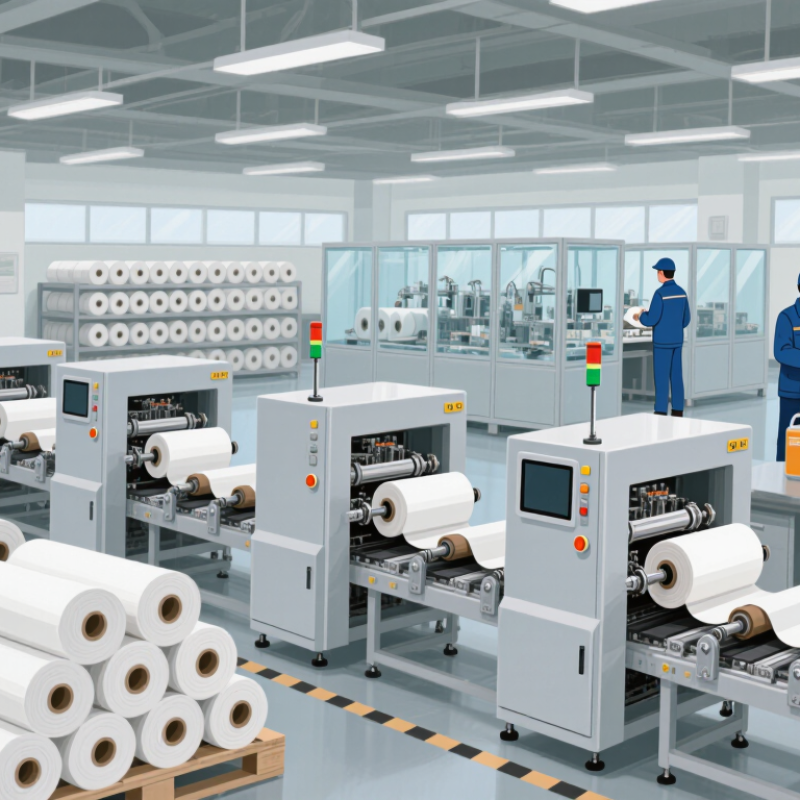
Thermal bonding starts with polymer staple fibers, often polyester, polypropylene, or bicomponent fibers. Operators open, blend, and card these fibers into a uniform web. Airlaying may be used for softer, bulkier structures. The web then passes through a heated calendar or oven. Heat softens the bonding component, while pressure or airflow fixes fiber intersections. Cooling locks the structure in place.

Small changes matter. A few degrees can alter loft, strength, and shrinkage.

The 2023 Global Nonwovens Industry Outlook reported global nonwoven production at about 13.8 million metric tons in 2022. That scale makes process control essential. Manufacturers monitor web weight, oven temperature, line speed, and moisture. A 2024 independent market assessment projected continued nonwoven growth through 2028, driven by hygiene, filtration, automotive, and construction demand.

Reports differ in scope, though. Forecasts should not replace plant trials. A specification can look perfect on paper, yet fail after washing or compression. That remains an uncomfortable lesson.

Tips: Check bond uniformity across the roll, not only at its edges. Record temperature profiles at several web points. Test tensile strength, thickness recovery, air permeability, and shrinkage after conditioning. Link supplier certificates to each production lot. Request pilot samples before approving large orders. Reliable suppliers should explain fiber blends, bonding methods, and tolerances clearly.

Major Applications Across Global Industrial and Consumer Markets

Thermal bond nonwoven materials support demanding applications across global industrial and consumer markets. In automotive interiors, they form lightweight insulation, trunk liners, and acoustic layers. Their fiber structure can reduce vibration while maintaining practical handling during assembly. Construction companies also use them beneath flooring, roofing, and wall systems. Consistent thickness matters there.

In filtration, these fabrics appear in air, liquid, and dust-control products. Suppliers must control fiber diameter, basis weight, pore structure, and bonding temperature. Small variations can affect pressure drop and service life. In hygiene products, soft thermal-bonded layers help manage comfort, fluid distribution, and shape retention. Mattress makers use similar structures for cushioning and breathable support. Medical packaging may require clean processing and documented performance testing.

Consumer applications continue to expand. Furniture linings, reusable shopping bags, garment interlinings, and protective packaging all rely on tailored nonwoven grades. Some suppliers offer flame-resistant, hydrophilic, or antistatic options for specific environments. These features need verification, not attractive claims. A low-cost fabric can create waste when it tears during converting. The material is not perfect. Recycling can also be difficult when fibers, coatings, or mixed polymers are combined. Buyers should request traceable specifications, production samples, tensile data, and aging results before scaling orders. Field feedback remains valuable, because laboratory performance does not always match humid warehouses, cold transport, or high-speed production lines.

Criteria for Evaluating Thermal Bond Nonwoven Suppliers

Evaluating thermal bond nonwoven suppliers requires more than comparing prices. Start with fiber selection, web uniformity, bonding temperature, and basis-weight control. A reliable supplier should explain how each variable affects softness, strength, loft, and dimensional stability. Ask for recent test data, not only a polished brochure. Samples reveal weaknesses. Check the material by touch, caliper gauge, tensile testing, and repeated folding. Small differences can become serious defects in finished products.

Production consistency deserves close attention. Review documented quality procedures, batch traceability, inspection records, and calibration practices. Suppliers with recognized quality systems may offer stronger control, but certificates should match the actual factory and product scope. Request samples from different production lots. Compare color, thickness, odor, roll edges, and bonding performance. That matters. A capable technical team should answer practical questions clearly, including how they handle fiber changes, machine downtime, and customer complaints.

Capacity and communication also influence supplier reliability. Confirm monthly output, lead times, packaging methods, storage conditions, and export experience. A supplier may promise fast delivery, yet lack backup equipment or suitable warehouse space. This is easy to overlook. During one evaluation, a visually excellent sample failed after humidity exposure; the testing plan had been too narrow. That mistake showed why performance should be checked under realistic temperature, moisture, and handling conditions. Responsible suppliers welcome independent testing and discuss limitations openly. No supplier is perfect. Honest disclosure is often more valuable than confident claims.

Criteria for Evaluating Thermal-Bond Nonwoven Suppliers

Industry-aligned procurement weighting for comparing thermal-bond nonwoven suppliers without using company or brand data. Technical performance, consistency, compliance, delivery reliability, and total cost are the main evaluation dimensions.

The criteria reflect commonly specified requirements for thermal-bond nonwovens, including basis-weight consistency, tensile performance, air permeability, thermal stability, quality compliance, supply continuity, and cost competitiveness. Technical properties are typically verified through applicable ISO or ASTM test methods.

Leading Thermal Bond Nonwoven Suppliers and Their Market Strengths

Thermal bond nonwoven suppliers compete through process control, material consistency, and application knowledge. Leading producers typically work with polypropylene, polyester, or blended fibers. They use hot-air ovens or calender systems to bond webs without chemical adhesives. This supports clean surfaces, stable thickness, and reliable processing for hygiene, filtration, furniture, and automotive applications.

Market strength often comes from flexible production rather than scale alone. Strong suppliers can adjust basis weight, loft, width, softness, and air permeability for different buyers. Their technical teams review fiber denier, bonding temperature, line speed, and roll tension. A capable supplier also provides batch records, test data, and samples from regular production. These details help engineers compare performance before approving a larger order. Small trial rolls matter.

Regional suppliers may offer shorter lead times and faster technical visits. Global suppliers often provide broader capacity, export experience, and more resilient raw-material planning. However, large capacity does not guarantee better fabric. I have seen specifications look excellent while production samples showed uneven bonding near the roll edges. This is where independent testing and factory audits become useful. Buyers should check tensile strength, elongation, thickness recovery, moisture behavior, and surface defects under actual use conditions. No supplier excels at every metric. Cost pressure can also encourage thinner structures, which may reduce durability. A careful purchasing decision balances price, consistency, technical support, and evidence from repeated shipments.